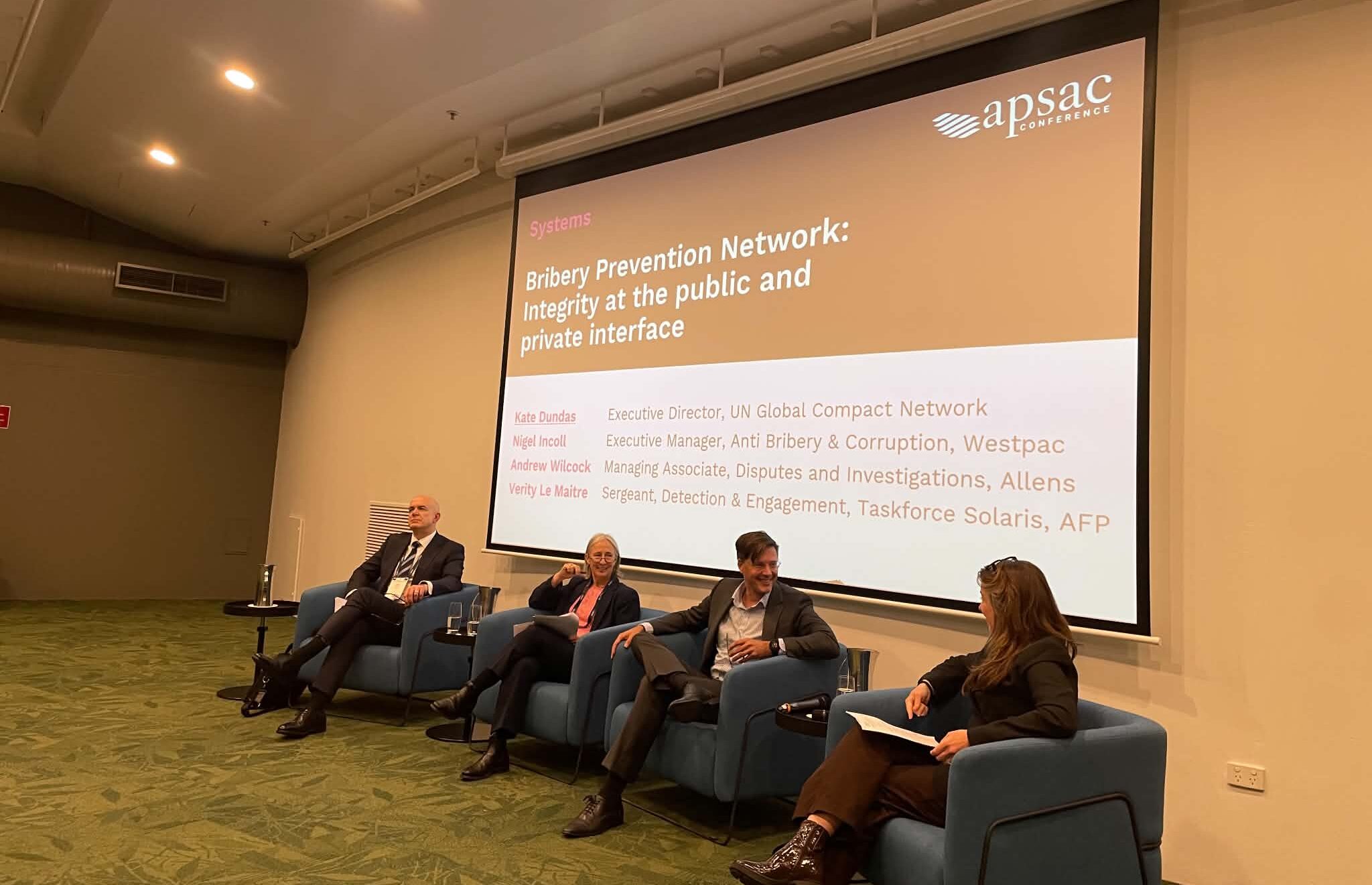
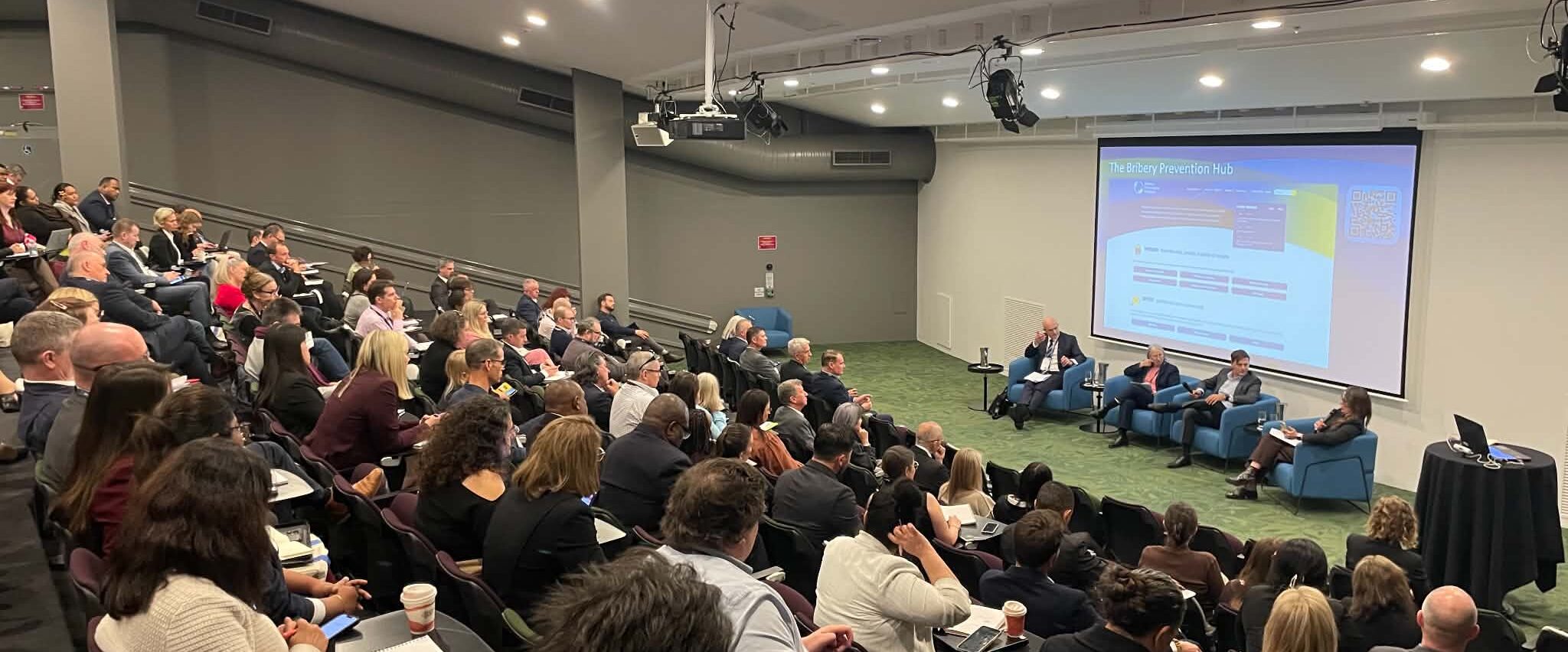
The Bribery Prevention Network (BPN) presented a session at the Australian Public Sector Anti-Corruption Conference 2026, held 7–9 September in Canberra and hosted by the National Anti-Corruption Commission. On Tuesday 8 September, the session “The Private Sector’s Role in Addressing the Public/Private Corruption Interface” was moderated by Kate Dundas, Executive Director of UN Global Compact Network Australia (UNGCNA), which hosts the BPN. She was joined by:
- Andrew Wilcock, Partner, Disputes and Investigations, Allens
- Verity Le Maitre, Sergeant, Detection and Engagement, Taskforce Solaris, Australian Federal Police
- Nigel Incoll, Executive Manager, Anti-Bribery & Corruption, Westpac Group
What the panel covered
- Where the risk arises. Points of vulnerability at the public/private interface — procurement and tendering, regulatory approvals, intermediaries and agents, joint ventures, and gifts and hospitality.
- A case study in red flags. The panel referenced a BPN case study developed with the AFP, in which an inflated property sale to a foreign state-owned enterprise involved false invoices, shell companies, and payments linked to Politically Exposed Persons (PEPs).
- Third-party risk and due diligence. Discussion of why third parties — including agents, contractors and subsidiaries acting for a corporation — remain a common source of exposure under Australia’s foreign bribery laws.
- Detection and data analytics. How organisations, including financial institutions, use data monitoring to identify patterns such as payments below approval thresholds or clusters of payments to unfamiliar vendors.
- Whistleblowing and internal investigations. What follows a “speak up” report internally, and considerations in referring matters to law enforcement.
- Cooperation between companies and enforcement agencies. Including “de-confliction” between parallel investigations, and models such as AUSTRAC’s Fintel Alliance.
The session took place while Australia’s 2024 foreign bribery reforms — which introduced a corporate offence of failing to prevent foreign bribery — remain in force, and while the Attorney-General’s Department’s statutory review of those reforms was open for submissions until 10 September 2026.
Related resources
- Recognising the Red Flags: A Case Study in Foreign Bribery — the case study referenced during the panel, developed with the AFP
- Anti-bribery policy template — contributed by Allens
- Statutory review of the Crimes Legislation Amendment (Combatting Foreign Bribery) Act 2024